Securing a professional pest control service Charleston homeowners rely on requires addressing the specific structural vulnerabilities caused by tidal humidity and historic architecture. Warm coastal conditions support active populations of subterranean termites, American cockroaches, and marsh mosquitoes throughout Charleston County.
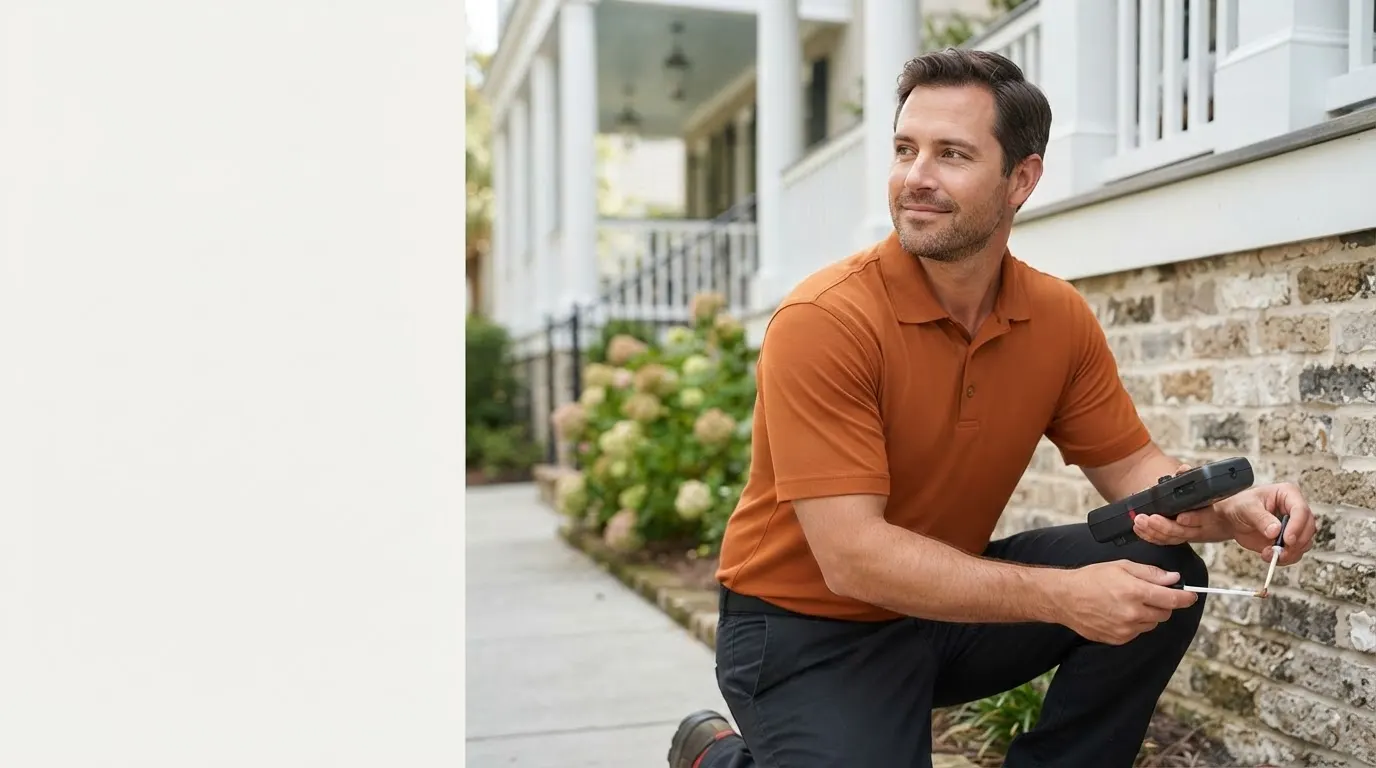
A pest control service in Charleston is an inspection, exclusion, and targeted extermination treatment designed to eliminate wood-destroying organisms, invasive insects, and rodents from coastal structures and landscapes.
Every service reflects the same meticulous attention to detail, whether it's a single job or a larger pest control service project across Charleston.
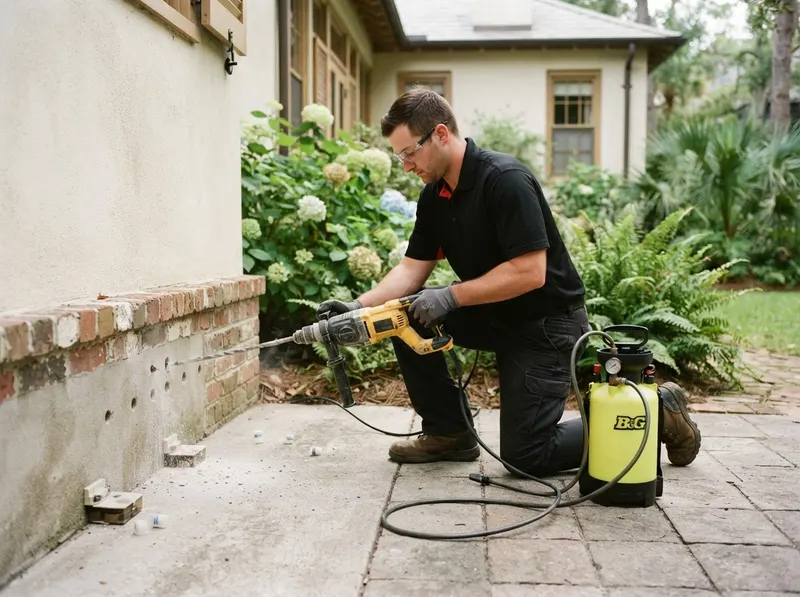
Comprehensive subterranean termite defense utilizes liquid non-repellent soil barriers and bait stations installed along foundation perimeters to eradicate native subterranean and invasive Formosan termite colonies before structural framing is damaged. Technicians apply non-repellent termiticide compounds via trenching and rodding around foundation piers, brick stem walls, and plumbing penetrations at labeled application volumes. Continuous baiting systems placed at ten-foot intervals provide ongoing subterranean colony monitoring and colony elimination through slow-acting insect growth regulators that foraging worker termites distribute throughout the underground nest.
Get a quote →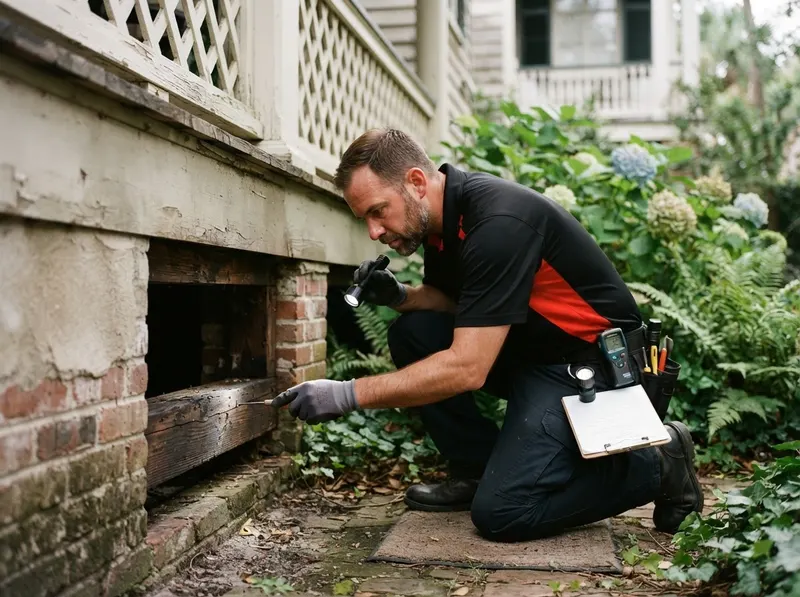
Detailed real estate transaction assessments document visible wood-destroying insect activity, previous structural infestations, and crawlspace wood moisture content exceeding safe coastal thresholds to meet South Carolina lending standards. Certified inspectors evaluate accessible substructure framing, joists, sills, and foundation piers using calibrated moisture meters and sounding tools to verify structural soundness. The resulting official documentation identifies Formosan termites, eastern subterranean termites, powderpost beetles, and wood-decay fungi while noting potential structural vulnerabilities requiring remediation prior to closing.
Get a quote →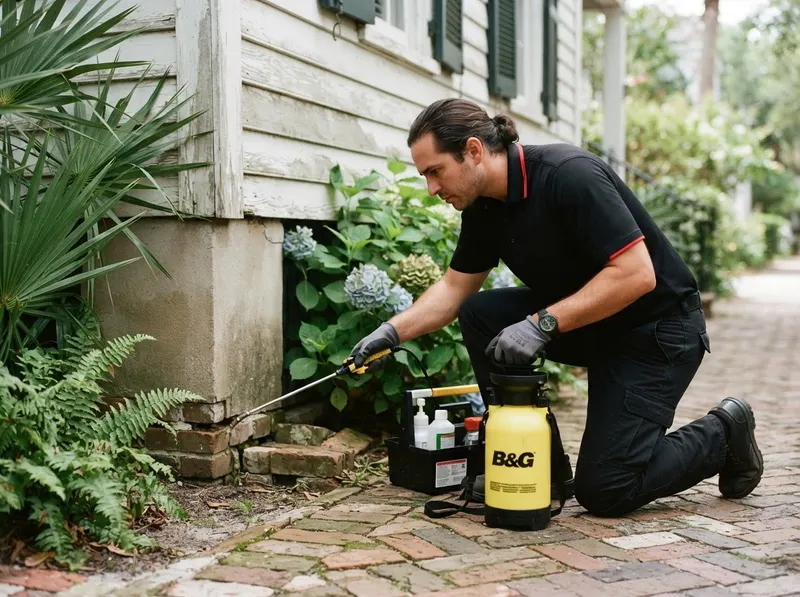
Targeted barrier treatments and structural exclusion seal gaps along brick weep holes, foundation sills, and rooflines to prevent outdoor American cockroaches and smokybrown roaches from migrating into living areas. Applications focus on exterior perimeter perimeters, crawlspace vents, perimeter mulch beds, and tree canopy contact points with microencapsulated residual formulations that withstand coastal rain events. Technicians apply specialized gel baits and insect growth regulators inside plumbing voids, wall cavities, and utility chases to eliminate indoor populations without broad chemical dispersal.
Get a quote →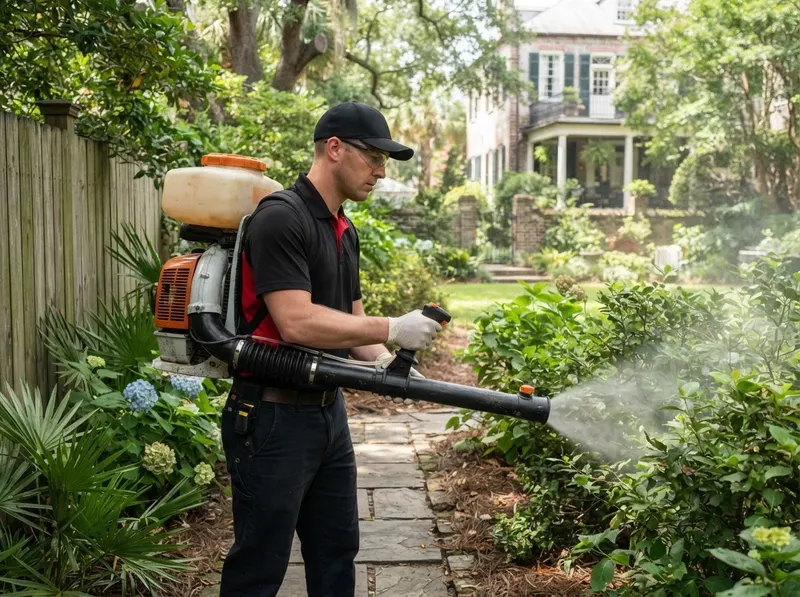
Vegetation barrier treatments paired with targeted microbial larvicides reduce adult mosquito and no-see-um harborage zones across shaded yards, marsh borders, porches, and ornamental foliage. Monthly mist applications coat the undersides of broadleaf shrubs, dense groundcovers, and underside deck areas where biting insects rest during daytime heat. Technicians treat non-flowing standing water sources, catch basins, and marsh drainage zones with Bacillus thuringiensis israelensis biological larvicide rings to break reproductive cycles before adult emergence.
Get a quote →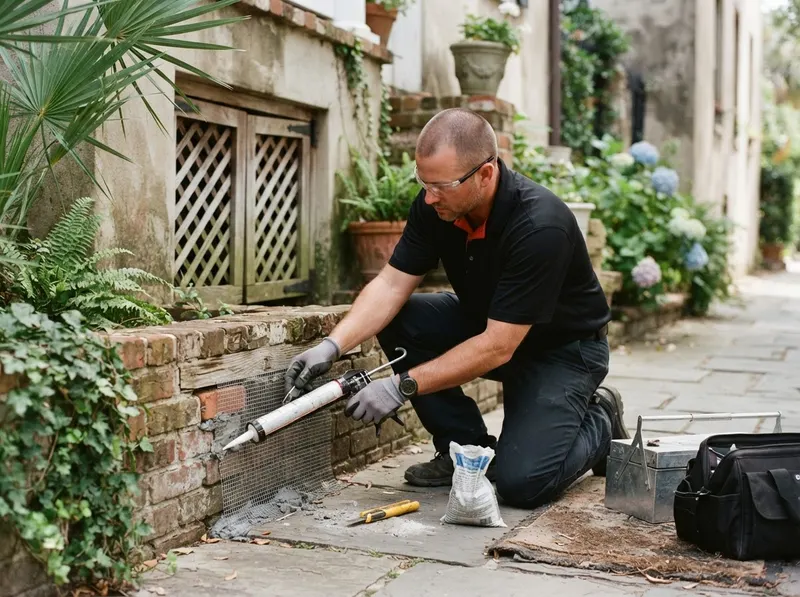
Sanitary exclusion seals exterior entry points larger than one-quarter inch using heavy galvanized hardware cloth, combined with multi-point interior crawlspace and attic trapping to eliminate roof rats and house mice. Technicians inspect roof returns, soffits, crawlspace access doors, and pipe penetrations to identify active rub marks, droppings, and travel corridors. Captured rodents are removed promptly to eliminate odor risks, followed by structural sanitation and targeted exterior exclusion that bars future entry without non-target chemical exposure.
Get a quote →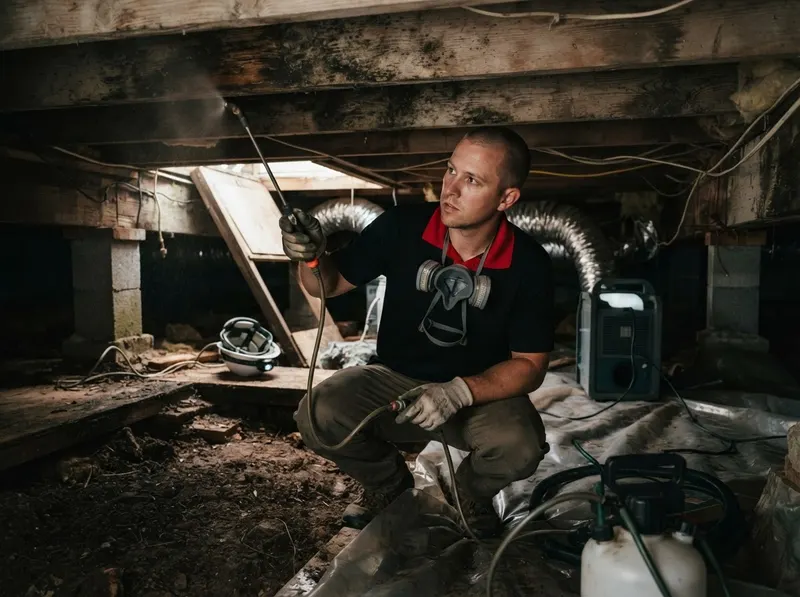
Supplemental moisture remediation controls damp crawlspace environments beneath historic homes using heavy-mil vapor barriers and targeted antimicrobial surface treatments that discourage wood-decaying fungi and structural pest activity. Crawlspaces exhibiting relative humidity levels over 70 percent and wood moisture readings over 20 percent are treated to prevent dry rot and subterranean termite colonization. Services include ground soil grading, polyethylene vapor barrier installation across bare earth, and perimeter vent adjustment to stabilize subfloor moisture.
Get a quote →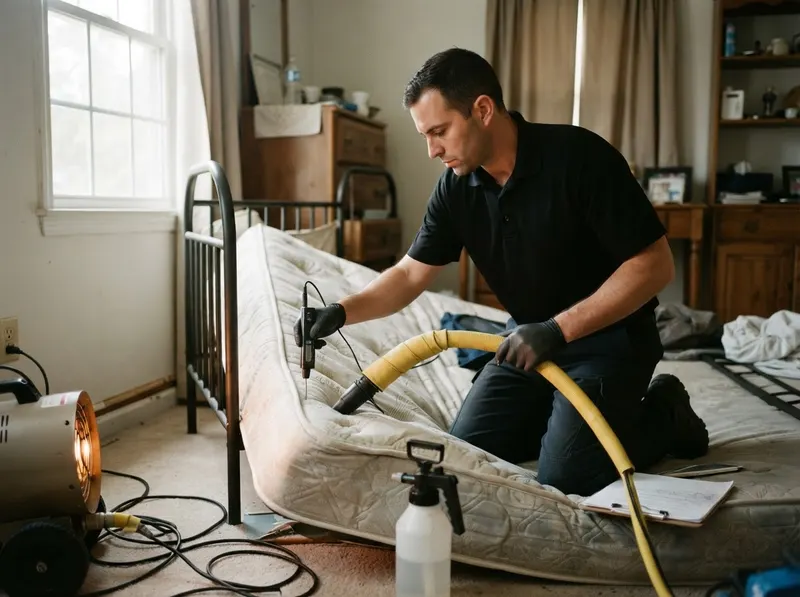
Thermal heating combined with residual perimeter applications penetrates mattress seams, baseboards, and wall voids to eliminate all life stages of bed bugs in residential properties and short-term rentals. Specialized commercial heating units elevate structural temperatures above 122 degrees Fahrenheit, penetrating furniture, textiles, and structural crevices to eliminate adult bugs, nymphs, and unhatched eggs in a single treatment. Follow-up treatments include targeted residual dust applications in electrical outlets and perimeter baseboards for residual protection.
Get a quote →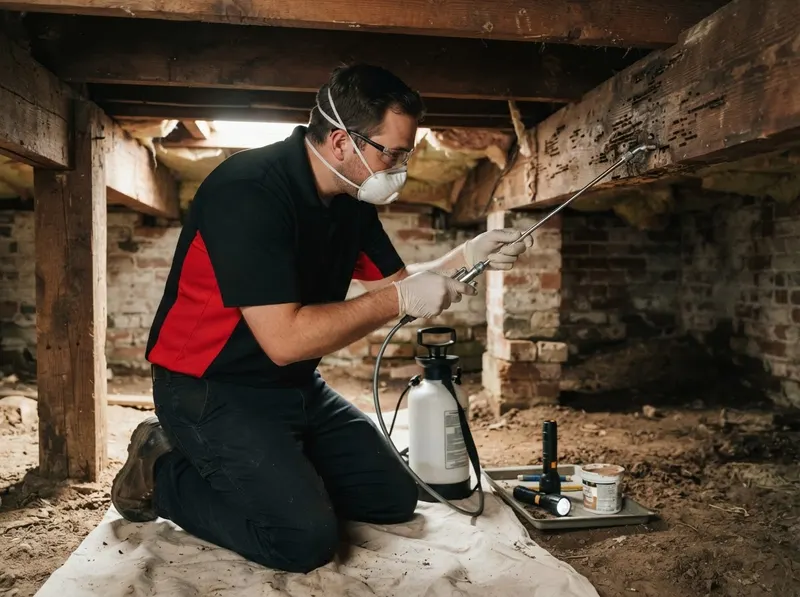
Direct liquid borate applications penetrate exposed structural crawlspace timbers, floor joists, and subfloor sheathing to halt anobiid and lyctid powderpost beetle wood destruction. Technicians inspect subfloor framing for round emergence exit holes and fine wood frass before applying specialized penetrating mineral salt formulations. The borate compound binds deep into raw wood fiber, eliminating feeding larvae while providing structural timber protection against wood-decay fungi and future re-infestation.
Get a quote →You get a firm, itemized quote for your pest control service before any work begins, no surprises, no pressure.
Careful prep, tidy work, and a full cleanup when we are done. We treat your home and belongings like our own.
The same trusted, background-checked team from the first call to the final check.
Selecting the right pest control approach depends directly on the structure's foundation type, crawlspace moisture levels, and the target organism. If a property features a historic brick-and-mortar pier foundation or an unencapsulated crawlspace in Wagener Terrace, Harleston Village, or South of Broad, choose a perimeter subterranean termite barrier combined with localized structural wood moisture treatments; if the property is a newer slab-on-grade foundation on Daniel Island or in West Ashley, choose an exterior bait station monitoring network. The trade-off between exterior liquid barrier treatments and bait station systems involves soil disruption versus consumption speed: liquid termiticides provide an immediate non-repellent chemical envelope along foundation walls but require continuous trenching around landscaped perimeters, whereas bait stations require zero continuous soil excavation but rely on foraging cycles over several weeks to achieve complete subterranean colony elimination.
If managing interior cockroach sightings, choosing physical exclusion via crawlspace access door sealing and copper mesh weep hole baffles stops recurring intrusions at the structural envelope, whereas interior broadcast liquid sprays only kill active foragers without preventing new entry from surrounding live oaks and palmetto trees. For yard insect pressure near marsh edges, automated mister systems or monthly high-volume mist applications suppress active adult populations across perimeter vegetation, while targeted biological larvicides applied directly to standing drainage zones prevent emergence without impacting non-target pollinators. If eliminating attic or crawlspace rodents, choose mechanical trapping coupled with rigid metal exclusion over chemical rodenticides; mechanical trapping removes carcasses immediately without indoor odor risks in coastal summer heat, whereas exterior rodenticide bait stations suppress outside populations but risk rodent expiration within inaccessible historic double-stud wall cavities.
For active subterranean termite infestations versus preventative maintenance, choose targeted localized foam injections into structural framing for immediate wood preservation, paired with a perimeter soil barrier to stop recurring foraging tunnels from surrounding clay soils. For short-term rental properties subject to high occupant turnover, selecting proactive quarterly preventative pest contracts ensures continuous insect growth regulator barriers around plumbing penetrations, whereas relying strictly on on-demand reactionary extermination risks negative guest reviews during sudden seasonal humidity spikes. Prioritize comprehensive multi-pest protection plans covering crawlspace inspections, quarterly barrier applications, and rodent exclusion when managing year-round Lowcountry humidity.
Every project gets a firm, written price after a free on-site visit. Ranges below for orientation.
Tell us about your pest control service job and we'll send a clear, written quote, usually the same day. Or just call and talk to a real Charleston pro.
(854) 260-5729
Charleston structures face heightened biological pest pressure due to high average relative humidity and elevated water tables near waterways like the Ashley and Cooper rivers. Historic pier foundations in neighborhoods such as South of Broad and Harleston Village frequently experience wood moisture content above 20 percent, creating prime harborage for subterranean termites, wood-boring beetles, and American roaches living in surrounding cabbage palmettos. Historic homes along Calhoun Street and Meeting Street often feature soft antique heart pine and cypress framing, which lack modern chemical treatment and remain exceptionally susceptible to invasive Formosan termite colonies that establish secondary aerial nests without ground contact. In neighborhoods like Wagener Terrace and Hampton Park Terrace, dense tree canopies dominated by mature live oaks and Spanish moss provide elevated travel pathways directly onto historic metal or slate roofs, allowing roof rats and tree-dwelling roaches to bypass ground-level perimeter chemical barriers. Meanwhile, waterfront properties adjacent to expansive salt marsh networks on James Island and Daniel Island experience intense biting midge and mosquito breeding in tidal ditches, requiring calibrated barrier treatments along property boundaries that eliminate biting adults without contaminating coastal waterways. Managing these varied architectural and environmental risks demands pest protocols adapted specifically to Charleston County's microclimates, porous masonry, and shallow coastal water tables.
Free estimates for Charleston & the surrounding area.
 Coastal Wren Pest Control